Digital Invitations Versus Printed Invitations for Australian Weddings
Hybrid invitations let Australian couples match format to guest, not etiquette rules.
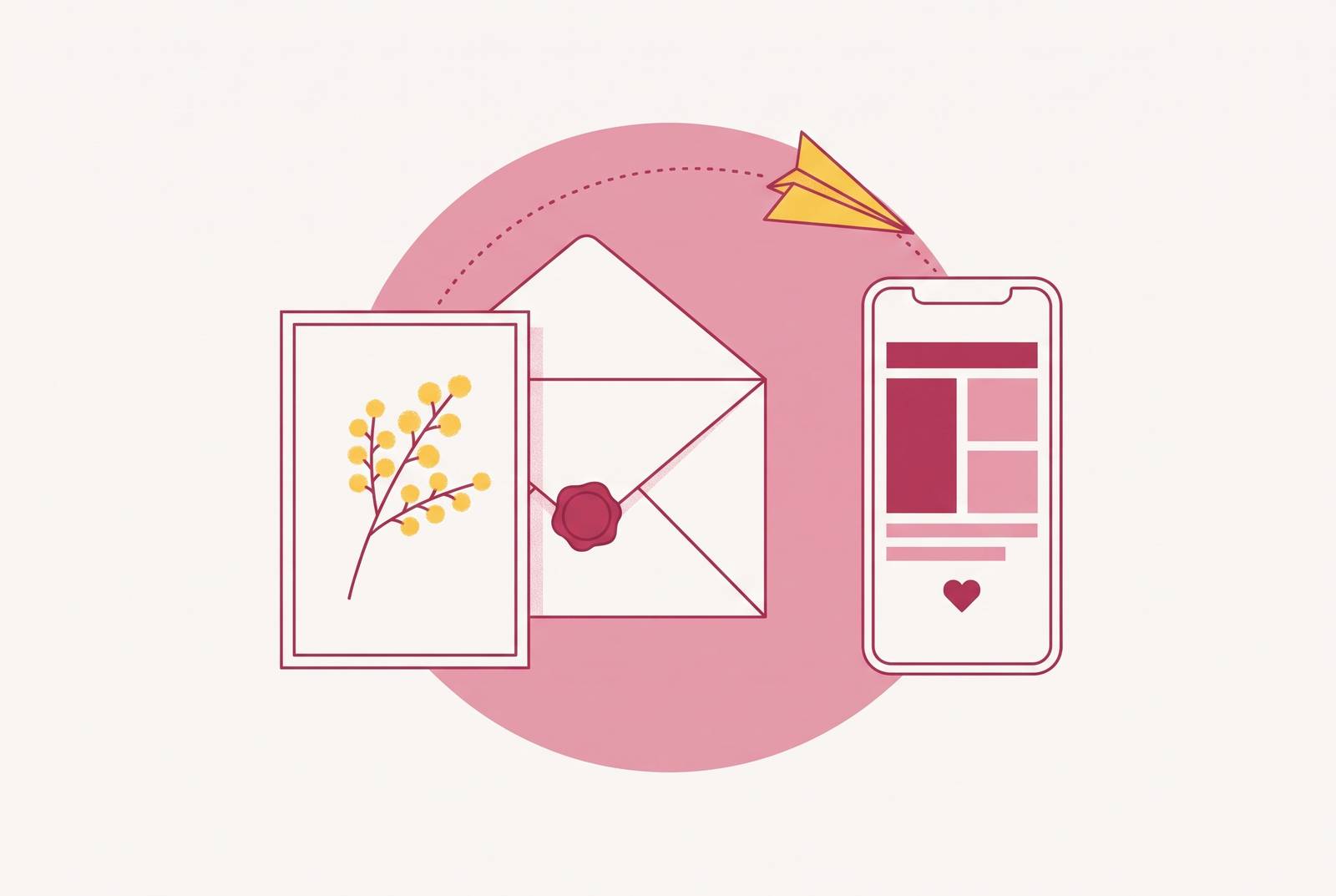
Digital versus printed wedding invitations is a practical choice for Australian couples in 2026. The right answer depends on budget, timing, guests and how replies feed into the rest of the planning. For many weddings, that means print for a smaller group, digital for everyone else, and one online RSVP system behind both.
Why this decision has changed for Australian couples in 2026
Both formats are socially acceptable in 2026. Couples no longer need to settle an etiquette argument before thinking about what suits their wedding. Peppermint Press, an Australian stationery studio with 14 years of industry experience, observes that paper has held firm for premium and formal weddings, while digital has become the logical default for casual, elopement, second-marriage and budget-conscious celebrations.
The fastest-growing approach gives couples more room to work with a mixed guest list by using each format where it has the functional edge. A grandparent who treasures a card and an interstate friend who wants a quick link need not receive identical invitations.
What printed invitations genuinely deliver, and where they fall short
A physical envelope in the letterbox gives a clear signal of an event’s formality and significance. That signal has a real purpose at traditional ceremonies, across multigenerational guest lists and where printed invitations are part of cultural protocol. The card is part of the occasion. Peppermint Press notes that professionally printed invitations become keepsakes that many guests hold onto. For those guests, the paper, design and physical presence are not decoration around the message but part of what makes it worth keeping.
Older guests or people less at ease with technology may find an emailed invitation hard to understand or feel it matters less than a posted card. Email has its own delivery problem, too. Invitations can get buried or mistaken for spam, making a reply less likely than with a physical RSVP card.
Australia Post delivery times can stretch to five or more business days, especially for regional and interstate addresses. A reply card can then sit on a kitchen bench while a guest finds a stamp and a mailbox. Once it comes back, handwriting that is hard to read can lead to a misspelled name on a place card or wrong dietary information. The invitation itself is also fixed at printing, so it cannot reflect later changes to the venue or timing.
What digital invitations actually do that print cannot
A digital RSVP can be completed in under two minutes, and the response arrives instantly. There is no return journey through the post. With real-time tracking, the couple can see who has replied and who has not, without entering returned cards by hand.
The same form can collect dietary requirements in a consistent, readable way. Guests type their answers instead of leaving someone to interpret handwriting, reducing ambiguity before information reaches the caterer. Changes are easier to handle as well. When a ceremony time shifts, a venue detail changes or a weather contingency applies, a digital invitation can show the latest version immediately. A printed card still shows whatever was correct when it went to press.
Digital also handles a wedding that extends beyond one ceremony and reception. A rehearsal dinner and post-wedding brunch can sit in the same scrollable form, with guests indicating attendance for each occasion. Invyt’s 2026 guide distinguishes paper’s formal weight and physical beauty from the features digital provides once replies begin. Digital earns its place through what it can do, even before couples weigh up the price.
What invitations actually cost in Australia in 2026, by format and approach
There is no useful single price for “printed invitations” because the approach changes what the couple is paying for. A professional stationery designer costs the most and manages the whole bespoke suite, with finishes and embellishments to choose from. The design work is handled for the couple. Custom work and specialty print finishes also take longer, so couples need to weigh up both the price and the time they have.
Full DIY can cost less when the couple already owns the equipment and software. When couples start from scratch, the cost of materials soon adds up, and the results from a home printer may not be worth the effort. Cheap on paper is not always cheap in practice. Sending files to a local print shop typically gives a better result at a similar price.
Digital printable templates sit between those two approaches. The Hello Bureau’s 2026 cost guide identifies personalised templates with outsourced printing as the sweet spot for quality without designer fees. Tools such as Canva or Etsy templates allow personalisation in minutes, while a local printer handles the physical finish. This is still a printed invitation. Going fully digital means paying much lower platform fees and having no paper suite to print.
Separate RSVP cards add to what needs printing, and couples may pay rush fees if time is short. Mailing should ideally happen several weeks before the wedding, which pushes design and print decisions further back than couples may expect. Printing for only a smaller group cuts the total spend. Those savings can go towards food, music or photography rather than paper for guests who would be equally happy with a link.
How the hybrid model works in practice for Australian weddings
For couples choosing a hybrid approach, the split should follow the guest. Grandparents, elderly family and people who want a keepsake they can hold onto get printed invitations. Close friends and work colleagues who are at ease online get digital invitations or a wedding website RSVP link. Digital delivery also works well for guests from out of town or overseas.
Late additions fit naturally into the digital group because a link can be sent in minutes without reprinting. For the printed group, a QR code connects the physical invitation to the online response form. The experience and the administration can be separate. A guest still opens a proper card, but the couple gets a reply with set fields, without having to enter the answers from paper by hand. Guests who struggle with technology remain a consideration, even when their invitation arrives by post.
The same code can lead to current wedding information after the card has been mailed. If the reception venue or a time changes, the details on the linked page can change without the invitation being replaced. The ink does not change, but the destination can.
How the RSVP connects to the guest list, dietary tracking, and seating chart
The RSVP is the first link in a chain that runs through the guest list, meal requirements and seating plan. A head count alone is not enough. Caterers in Sydney, Melbourne, Brisbane and Perth typically need final numbers, including dietary requirements, one to two weeks before the event. By then, the couple needs replies they can use without having to work out what guests meant. The way replies were collected shapes how much work remains.
Guests can use one digital form with set fields to say which meals they want, list dietary requirements and mobility or accessibility needs, and say which events they will attend. Each guest types their own name and what they need. That removes handwriting ambiguity, though the value goes beyond legibility. When the response data flows automatically into the guest list and then the seating chart, dietary information reaches the caterer and the floor plan together. The couple does not have to reconcile separate versions in the week before the wedding.
Someone must read each answer, record it and keep the relevant planning records aligned. Multi-event weddings make that harder because attendance needs to be tracked separately for each occasion. A digital system that links those records shows all the replies together.
The role of a wedding website alongside the invitation, whatever format it takes
A wedding website gives guests a single place to find the current details, from the save-the-date through to the wedding morning. For that role to work, it should be live and detailed before invitations go out. The invitation then has less work to do. It can direct guests to the site rather than trying to contain every piece of information they might need. This applies just as well to a printed card as to a digital invitation.
Hotel recommendations, parking, transport, child policy, gift information and menu notes can move from printed inserts to the site. That keeps a printed suite simpler and cheaper while allowing details to change without a reprint. The site also has room to expand. A full multi-event timeline, venue maps, accommodation links and FAQs give guests the details they need in one place, while photo galleries and a live countdown offer more than a card has room to show.
When the RSVP form lives there too, the printed QR code and digital invitation link can point to the same destination. That shared destination supports one tracking system for both delivery formats and is particularly useful when guests are scattered interstate or across time zones. They can find accommodation or parking information without waiting for the couple to answer. The website becomes the reference point, while each invitation remains the way a guest reaches it.
When to choose digital, when to choose print, and when to use both
The decision comes down to four checks, which are timeline, budget, guest mix and formality. Choose fully digital when the wedding is inside two to three months and standard print lead times would trigger rush fees. It also works well when most guests are under-40, are at ease with technology and live interstate or overseas. Budget can make the choice clearer still. If skipping print leaves more money for food, music or photography, digital is a good use of the budget and still a fitting invitation.
Choose print for at least part of the list when the wedding is formal or traditional, or a religious ceremony includes printed invitations as part of cultural protocol. It also earns its place when grandparents or elderly relatives would feel excluded by digital-only delivery. A valued keepsake is a valid reason. The budget needs to accommodate that choice, and a planning timeline of four to six months gives more room to avoid rush fees. Print does not need to win on convenience to be worthwhile.
Choose hybrid when guests need different things, as they will at many Australian weddings. A smaller group chosen by the couple gets paper, everyone else gets digital, and both lead to the website RSVP. That preserves the formal gesture without paying to print it for people who do not need it. The final priority is the reply mechanism. Whatever form the invitation takes, a digital RSVP keeps replies in set fields so the couple can track them and use them for the guest list, caterer and seating plan.