Children at Weddings and the Guest Count Complexity They Add
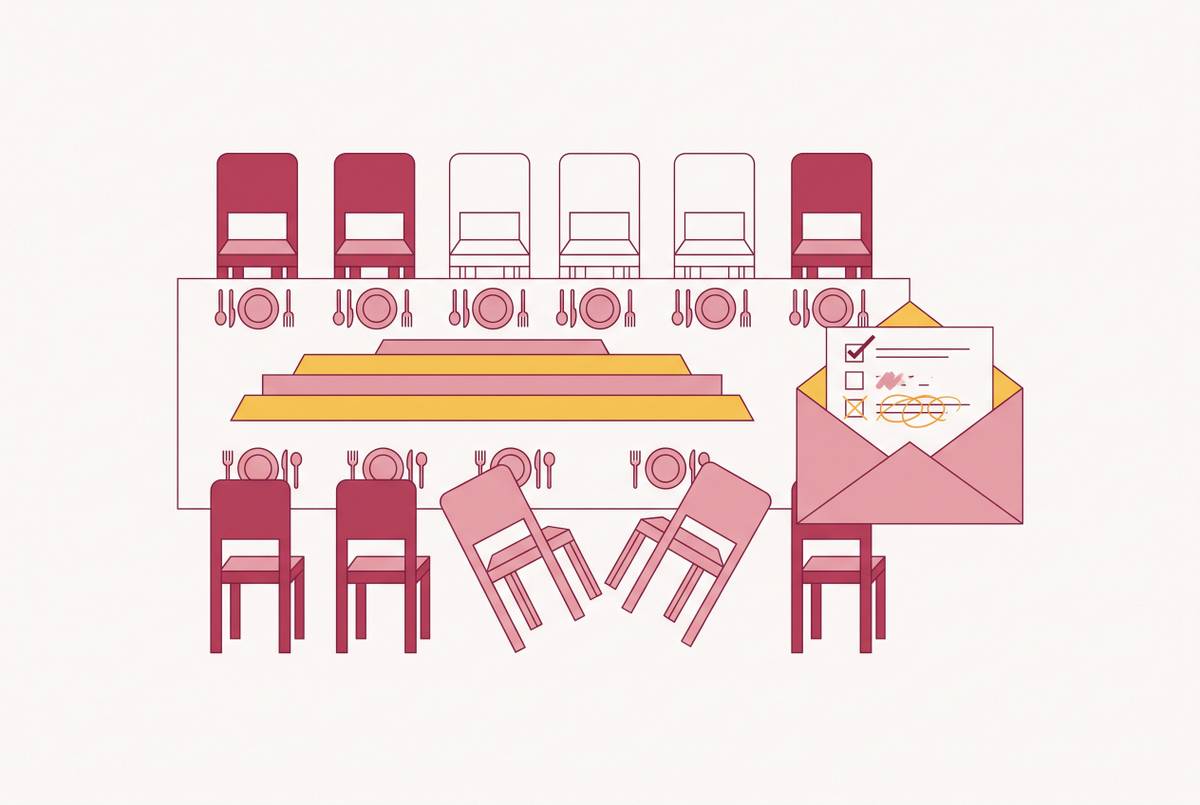
Planning for children requires juggling three separate cost and capacity calculations.
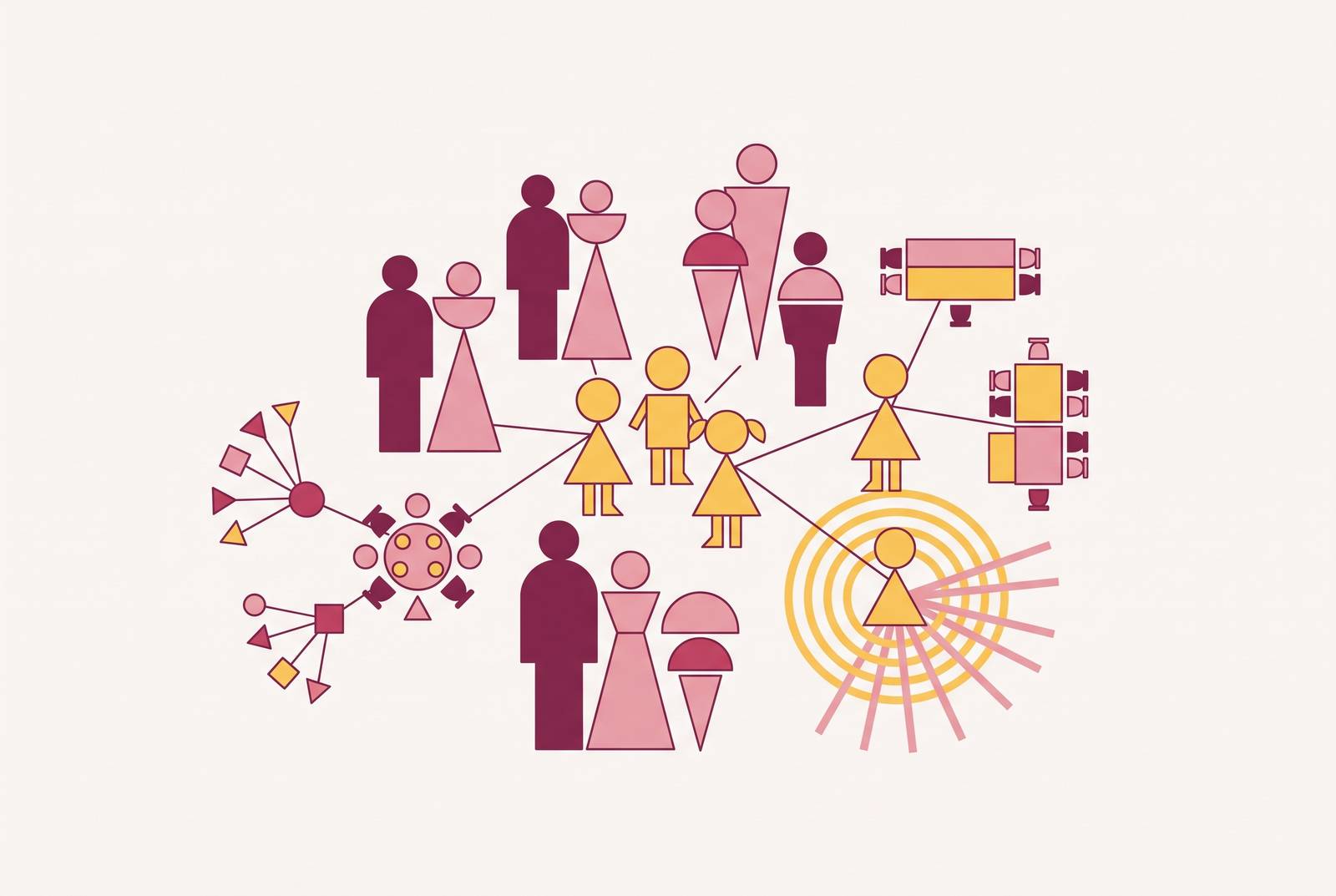
Guest count drives every wedding budget line, from venue capacity to catering to favours. Children complicate that math more than most couples expect, because they don't count the same way twice. A toddler might eat free at the buffet, still need a high chair, and still count as a body against the fire code. Sort that out early, and planning stays calm. Leaving it for three weeks before the big day turns it into a scramble nobody has time for.
The three counting layers venues and caterers apply to children
Every venue and caterer runs children through three separate filters. Couples who only think about one of them get blindsided by the other two.
Capacity comes first, and it's the one layer that doesn't bend. Fire codes don't care about age. A venue rated for 150 people is full at 150 people, whether ten of those bodies are six-year-olds or sixty-year-olds. That number comes from the building, not the caterer, and no amount of negotiating moves it.
The catering head count is where things get messy. Some venues exclude children under two. Others give a free pass under three and charge a reduced rate from three to twelve. Others still treat any child over twelve months as a full guest for catering purposes, full stop. Buffet service muddies it further: a venue running a buffet might not charge for a child who picks at a small plate, while a plated three-course dinner almost always needs a guaranteed cover per child, because the kitchen has to fire that exact number of dishes, no picking allowed.
Then there's physical accommodation, and this is the layer couples forget until the week of the wedding. High chairs, booster seats, stroller space at the table: none of it appears on a catering invoice, but it still has to be sourced. Some venues stock it free. Others charge for every piece. Pricing swings hard even within the same market: pricing can vary dramatically from one venue to the next, with children's packages differing significantly even within the same market. Same country, same rough guest experience, vastly different costs.
What children cost at an Australian wedding
Adult per-head costs at most Australian venues run $170 to $220 for catering alone. When beverages and venue fees are folded in, the full per-guest figure is usually between $180 and $300.
Children typically run 50 to 75% of that adult rate. Do the math on a mid-range wedding and it comes out to a meaningful per-child cost once catering, the seat, and incidentals are tallied. That's not nothing, and it's nowhere near the free ride couples picture when they first sketch out the guest list.
Even children under five, who often dodge a direct catering charge, still need somewhere to sit. A high chair has to come from somewhere. If the venue doesn't stock one, that's a rental cost nobody put in the first draft of the budget.
The children-or-not decision and venue capacity and guest list
Capacity is a ceiling, not a suggestion. Invite children and push the count past what the venue allows, and adults the couple actually wants there start getting bumped instead. That trade-off deserves a real conversation, and it needs to happen before a venue coordinator flags an overage two months out, not after.
The composition of the guest list matters as much as the headcount. If most of the list is young families, an adults-only policy doesn't just exclude the kids, it functionally excludes the parents too, since plenty won't come without childcare sorted. If children are a small slice of the list, an inclusive policy barely moves the needle either way.
One couple capped at a 150-person venue started with an estimate of 75 guests. Once they opened the invite to children across families averaging two to three kids each, that number crept toward the ceiling and threatened to blow past it, with every added child tacking on another per-head catering charge. Another couple, working with a 52-person wedding, counted two toddlers as required under their venue's policy, and lost an adult couple who declined once they realized inviting kids meant their own invite got dropped. A straight swap: adults out, children in.
The main policy approaches couples use and what operational requirements each one carries
Four approaches cover most weddings. Each one comes with its own checklist, and none of them is automatically the right call, it depends on the venue, the guest list, and how late the reception runs.
Adults-only needs no justification. It works especially well when the venue is tight against capacity, the reception runs late into the night, or the couple wants an adult room for the evening. The one hard requirement is early, unambiguous communication on the invitation, so parents can line up care well ahead of time instead of scrambling the week of. Name any exceptions outright: "adults-only, with the exception of our flower girl Sofia and ring bearer Miguel." Vague exceptions generate more confusion than clearly named ones ever do.
Ceremony-only splits the difference. Kids attend the ceremony, then the reception goes adults-only, which keeps the catering count adult-only and no extra per-head cost lands on the budget. Parents need somewhere for their kids to go during the gap between ceremony and reception, and the invitation should point to a concrete option, a grandparent taking kids home, a hired childminder on-site, rather than leaving parents to sort it out cold.
Age-limit invites, phrased as something like "guests 12 and over welcome," suit evening weddings with a late dinner and dancing that runs well past a young child's bedtime anyway. The age line itself has to be airtight. State it clearly on the invitation or the wedding website, because fuzzy wording here is the single biggest generator of guest questions.
Fully welcoming children is the heaviest lift of the four, and it only works if it's planned from day one rather than bolted on late. Children's menu options need to be locked in with the caterer and folded into the final head count. Every child needs an assigned seat, and any dietary need or allergy has to reach the caterer alongside the adult list, not as an afterthought tacked on later. A dedicated kids' area, stocked with colouring books, crayons, and simple crafts, keeps younger guests occupied and their parents free to actually enjoy the reception. For longer events, a screen playing family-friendly films in a side room does the same job. Parents are guests too, and seating them near an exit, or giving them easy access to a quiet room, is a small courtesy that keeps a fussy toddler from becoming the whole table's problem.
Seating chart and dietary logistics complications from children
Seating charts should wait until the bulk of RSVPs are back, which typically means working from a near-complete list in the final weeks before the wedding. Children's RSVPs can be among the last to settle, often because parents are waiting on their own childcare arrangements before committing.
Once a child is confirmed, that child needs a specific seat, a chair or high chair marked on the floor plan, and a meal noted for the caterer: the same treatment as any adult on the chart. Skip any of those three steps because "they're just kids," and gaps become visible on the day, usually at the worst possible moment.
Dietary needs for children run more specific, not less. Allergies and food aversions are a real consideration with young children, and those details need to reach the caterer at RSVP, attached to a floor plan showing exactly where each child sits. Dietary information collected through a casual channel, a text message, a sideline comment at a shower, almost never makes it into the formal record the caterer actually works from. A nut allergy mentioned once in passing and never logged anywhere official is a real risk.
How to set your RSVP process up to capture what you need from families with children
Most RSVP forms are built with adults in mind. They ask for a name and a meal choice, and that's about it. They don't ask whether a toddler needs a high chair, whether a booster seat is required, or whether a children's menu applies, and they draw no distinction between a two-year-old and a ten-year-old, even though those two guests need completely different accommodations.
A form built for families with kids needs to capture the name and age of every child attending, since age usually decides which meal tier and catering rate applies. It needs a line for high chair or booster seat requirements, a line for the children's menu selection where one exists, and a line for allergies or dietary restrictions specific to each child, not just the household.
Set the RSVP deadline three to four weeks ahead of the wedding, so there is time to chase stragglers before the venue needs final numbers. That buffer exists to chase down stragglers, and families with young kids are disproportionately the ones who respond late, often because they're waiting on their own childcare plans to firm up before committing. Guest list uncertainty is a well-known source of stress in wedding planning. A form that doesn't force a clean answer on whether the kids are actually coming just lets that uncertainty drag on longer than it needs to.
Building a budget that accounts for children honestly from the first draft
ABIA data covering 10,000 couples puts the average budget overrun at 18%, and a meaningful chunk of that gap traces back to costs mentally filed under "free" early on. Children's catering rates, high chair fees, activity supplies, and the time spent managing all of it belong squarely in that category.
Venue and catering together usually make up 45 to 55% of total wedding spend, which makes this the single highest-leverage line item in the whole budget, and it's exactly where children's costs land. Get this number wrong, and everything downstream of it drifts.
A few adjustments hold the line. Count each child at the rate they'll actually be charged, zero, half-rate, or full children's menu price, rather than defaulting to zero because "kids eat less." Include children with assigned seats in the stationery count, since place cards apply to them too. Neither adjustment costs much time, and both close gaps that otherwise appear as surprise charges two weeks before the wedding.
None of it holds together without a planner that tracks estimated cost, actual quoted cost, deposit paid, and balance still owed, for every line, including the children's catering tier. That's the minimum structure it takes to keep an 18% overrun from becoming the couple's own.
Sources
- Wedding Costs in Australia 2025: Budget, Planning, and Expenses
- Kids at Weddings: How to Set and Communicate Your Policy
- Children at Weddings: The Complete Planning Guide
- Kids at Weddings: Cost Impact and Etiquette
- Do You Count Babies in Wedding Guests? 5 Things to Know
- everafterweddings.com.au
- jonnybarratt.com